
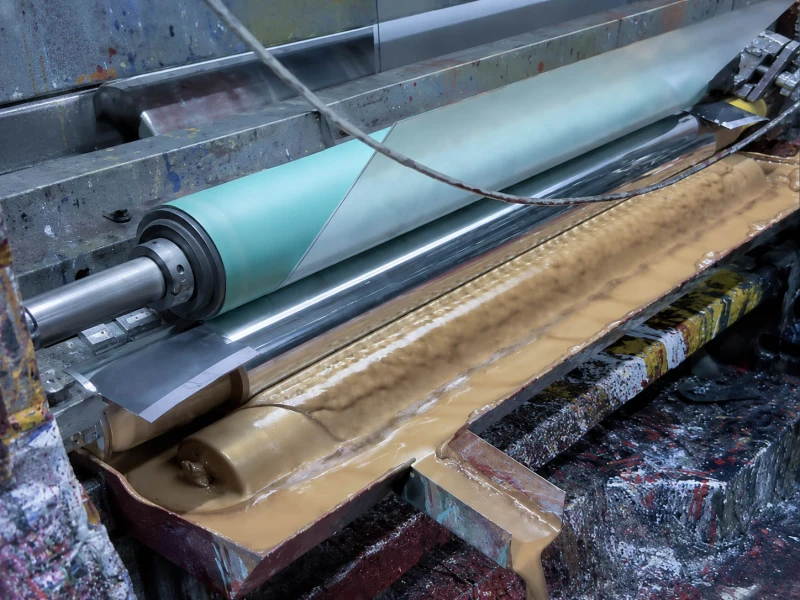
Does the Dry Band Stay in One Place?
A fixed band is easier to trace than a general complaint that “the roller does not take ink.”
Record where the band sits across the roller face and how wide it is. If it repeatedly returns to roughly the same cross-machine position, note which roller it belongs to as well. A band that stays on one roller through normal color changes or job changes carries more weight than a weak area that moves around the ink train.
When several rollers begin carrying ink poorly at about the same time, look at what those rollers share. Excess fountain solution, a change in ink–water interaction, contamination, or another common operating condition belongs earlier in the check.
Intermittent transfer gives a different pattern. The roller may carry ink normally at startup and lose it after the press has been running for some time. If that timing repeats from run to run, write it down. “Starts after warm-up” is more useful than “sometimes strips.”
For a wider view of rubber-covered roller positions around printing lines, see Rodillos para la industria de la impresión.
What Changes Before the Ink Starts Pulling Away?
Normal production usually gives enough comparison points without creating a special test. A new ink, a color change, a longer run, a warmer ink train, normal cleaning, or an existing change in dampening condition can all provide useful evidence.
| Lo que ves | Compare with | Keep attention on |
|---|---|---|
| The same dry band stays on one roller. | Band position, width, cleaning response and the local roller surface. | Local contamination or a persistent change in that part of the cover. |
| Several rollers lose ink at about the same time. | Fountain condition, ink condition and when the problem started. | Ink–water interaction or a condition shared by the roller train. |
| The roller is normal at startup and strips later. | Running time, available roller temperature and whether the timing repeats. | Temperature-related ink behavior or something building during the run. |
| Cleaning restores the film, then the same area dries again. | How long the recovery lasts and exactly where the band returns. | Recurring contamination or a persistent local surface change. |
| The problem starts after an ink, color or job change. | The previous stable job and what actually changed between the two runs. | Ink, fountain solution, wash history or another changed process condition. |
Actual changes to fountain solution, press settings or cleaning chemistry should follow the press manufacturer and consumable supplier requirements.
Does the Problem Move with the Dampening Condition?
Offset ink rollers work continuously around an ink–water balance. When too much fountain solution reaches the ink train, or when contamination changes the way a surface wets, the ink film can lose stability.
Calcium is a practical example. Calcium carbonate from paper can enter the dampening system. Calcium and gum contamination can make ink rollers more hydrophilic, allowing fountain solution to stay on the roller surface more readily and contributing to ink emulsification and roller stripping.
Other deposits, including soap, clay and paper-related debris, can also interfere with the condition of ink rollers and the dampening system. A roller can therefore look mechanically intact while its surface no longer behaves the way it did when clean and stable.
The useful field signal is whether the dry area moves or changes as the dampening condition changes during normal production. If several rollers react together, keep the investigation on the shared process condition before treating one roller as the cause.
Does Stripping Appear Only After Warm-Up?
The ink train generates heat through roller friction. Offset ink viscosity responds strongly to temperature, so a roller train that behaves normally when cold can behave differently later in the run.
A useful published scale is that a 1°F change can alter offset ink viscosity by about 3–4%. Changes in viscosity also affect tack, water pickup and other press behavior. This figure is useful as background, not as a press setting or acceptance limit.
If the same weak band begins after a similar running time on several jobs, record the time and any available roller-surface temperature. If the band is already present from startup and stays in exactly the same position, temperature becomes a weaker lead.