PP Hollow Sheet Haul-Off Roll Covers: Grip Without Crushing
PP hollow sheet can slip at the haul-off, but increasing roller pressure may flatten its internal channels. The rubber cover needs enough grip to pull the sheet without crushing the hollow structure.
The sheet consists of two outer skins connected by internal ribs. Its resistance to compression depends on skin and rib thickness, cavity shape, and cooling. The first haul-off may receive a profile that has taken shape but is still relatively soft.
When replacing PP hollow sheet haul off rubber rollers, start with the actual roll pair and the sheet condition at that position. A proven original specification is a practical starting point for an unchanged application. If the existing contact damages the cavities, the cover needs a closer review before replacement.
Why the First Haul-Off Needs Different Contact
The first haul-off pulls the sheet from the calibration section, often before the profile has gained full stiffness.
Consider two hollow sheets of the same overall thickness. One has closely spaced ribs and relatively thick skins. The other has wider cavities and thinner walls. Under similar roller pressure, the second profile may be more prone to local indentation, particularly while it is warm.
This makes the actual cross-section useful when selecting a replacement cover. The outer thickness alone cannot show how the internal structure supports the roller load.
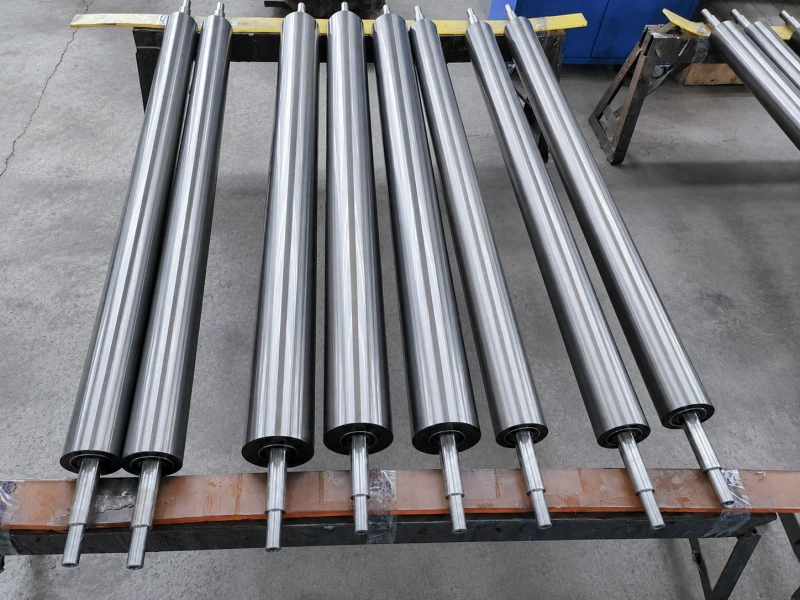
Some PP hollow-sheet machines use several rubber-covered rollers in the first haul-off. With suitable contact and coordinated drives, multiple roll pairs can share the pulling duty and reduce the load concentrated at one contact. This arrangement is particularly relevant while the profile is still relatively soft.
A later haul-off may receive sheet that has undergone further processing and cooling. Its cover should therefore be matched to the condition at that position rather than automatically copying the first puller’s specification.
For the broader application requirements, see Rodillos para procesamiento de láminas y placas plásticas.
Which Haul-Off Position Are You Replacing?
First haul-off — The sheet may still be warm and relatively soft.
Check the hollow cross-section and whether the original contact has caused cavity collapse. The cover must provide enough grip without damaging the internal structure.
Later haul-off — Further processing and cooling may have increased sheet stiffness.
Identify the original cover specification and confirm the sheet condition at this position. The equipment team should verify contact and speed coordination with the upstream puller.
After full cooling — The profile has reached its cooled state.
If another rubber-covered pulling or handling roller is installed here, identify its actual duty and original construction before ordering a replacement.
The number of roll pairs and their arrangement vary by machine. Confirm the installed assembly before ordering replacement rollers.
When More Grip Starts Crushing the Cavities
If increasing nip pressure reduces slipping but leaves flattened cavities, compare the sheet immediately before and after the suspected roll pair.
Look at the hollow cross-section. A shallow impression on the outer skin is different from a cavity that has lost height. The second condition shows that the internal profile has been compressed.
The location of the damage helps narrow the cause.
For example, if the sheet enters one roll pair with intact cavities and leaves with several flattened channels near one side, check the corresponding area of the roller face.
A worn band on the cover at the same width position strengthens the reason to inspect that pair. If existing operating records also show that increasing pressure makes the same cavities flatter, roller contact becomes a more credible contributor.
The next step is to examine how the cover makes contact.
A worn or polished surface may have lost some of its original grip. Increasing pressure to compensate can place more load on the hollow structure. Uneven contact across the roller face can concentrate that load in one part of the sheet.
When specifying a replacement, examine the cover’s surface condition, hardness, thickness, and compression behavior together. The required grip must be achieved within the compression the sheet can tolerate.
A softer cover may change the contact area and deformation under load, but softness alone cannot establish whether the hollow ribs will be protected. Surface grip and the actual mating contact matter as well.
For positions where the rubber-covered roller forms a controlled nip, see Rodillos de presión.
The damage pattern can also point away from the roller.
If the cavities are already distorted before entering the haul-off, the forming or cooling process needs attention. If a new sheet specification develops widespread collapse without a corresponding local roller-wear pattern, its wall thickness and cooling condition should be checked before changing the cover.
What the Old Roll Pairs Reveal
On a multi-pair haul-off, compare the rollers instead of assuming they have worn at the same rate.
One damaged cover among otherwise healthy rollers may point to an isolated replacement. The upper and lower rollers should be checked separately, since the mating roller or uneven loading may also be involved.
Several pairs showing unusual wear suggest a wider contact or operating problem. If the sheet is being dragged between driven pairs, the equipment team should verify their surface speeds and contact conditions.
A new rubber cover cannot correct an incorrect drive relationship. That problem needs machine-side attention before the roller specification is changed.
For a confirmed rubber-covered pulling position, the broader functional requirements are covered under Rodillos de tracción.
When to Keep the Original Cover Specification
If the original roller has performed well and only the cover has worn through normal service, a like-for-like replacement is usually the simplest route.
Start with the original drawing or confirmed specification. Identify the rubber-covered component in the roll pair and confirm its finished outside diameter, face length, cover thickness, core construction, and shaft-end details.
A heavily worn roller may have lost diameter. Its current measurement should be checked against the original specification before manufacturing a replacement.
The cover deserves a fresh review when the working conditions have changed or the old problem keeps returning.
For example, a customer may switch to a hollow sheet with thinner skins or wider cavities. The original roller dimensions may still fit the machine, but the cover must now work with a profile that may tolerate less compression.
A change in cooling conditions can have a similar effect at the first haul-off. If the existing cover can maintain grip only at a pressure that damages the sheet, copying its original hardness and surface finish may reproduce the problem.
Keep the confirmed mounting dimensions. Review the rubber compound direction, cover thickness, hardness, and surface finish against the new contact requirement.
For routine replacement, Wolorin can proceed with custom manufacturing, quotation, or production confirmation from drawings, samples, or clear specifications. For changed applications, the sheet cross-section, actual roller position, and old cover condition help establish what needs to be revised.
Páginas relacionadas
Rodillos para procesamiento de láminas y placas plásticas
Rubber roller applications in plastic sheet and board production.
Rubber-covered rollers for grip and pulling.
Rollers for controlled nip contact and pressure distribution.
Have drawings, sizes, samples, or a confirmed specification? Send them with the roller position and contact medium for custom manufacturing, quotation, or production confirmation. Otherwise, old-roller photos, the hollow-sheet cross-section, and a brief description of slipping or cavity damage are enough to start.