Cómo elegir cubiertas de goma para los rodillos de presión de la línea de decapado

A pickling-line squeeze roll cover should be chosen by looking at where acid reaches the roller, how long each area stays wet, and how the steel strip loads the rubber.

The center of the roll may handle steady squeezing pressure and short acid carryover. The strip edges can wear or cut two narrow lanes into the cover. Spray and runoff may reach the roll ends. On segmented rolls, liquid can remain inside the gaps after the exposed face has drained.

These areas need different levels of protection.

A practical selection order is:

Acid contact area → contact time → strip-edge action → cover and end structure → hardness and surface → rubber compound direction

When the old roller has worked well and worn evenly, replacement can stay straightforward. Drawings, dimensions, known hardness, roller position, and old roller photos are often enough to begin.

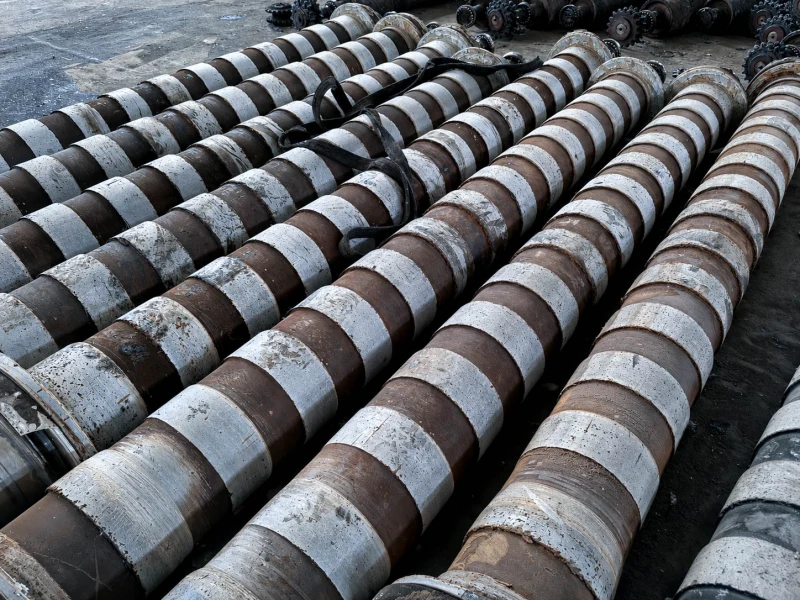
segmented pickling line rollers

Choose the Cover by Where Acid Reaches

Start by marking every area that can become wet:

  • the main working face;
  • the two strip-edge lanes;
  • the sides and ends of the rubber cover;
  • shoulders, sleeves, and exposed metal transitions;
  • segment sides, gaps, and recessed areas;
  • the joint between the rubber and the metal core.

Then record how the liquid reaches each area. It may arrive as spray, acid carried on the strip, continuous wet contact, runoff, rinse water, or cleaning liquid.

Contact time changes the requirement. A roll that receives brief carryover and is rinsed regularly has a different duty from one that stays wet through a long production run. Acid left around an end, shoulder, or gap during shutdown can create stronger local exposure than moving liquid on the face.

El Rodillos escurridores y deshidratadores page covers the wider role of squeeze, wringer, and liquid-removal rolls. For a pickling-line cover, the final direction should follow the exposure found on the actual roller.

Where the liquid reaches Main concern What the cover needs
Working face only Squeezing load, surface wear, short acid carryover Even contact, suitable hardness, consistent grinding
Face, edges, and roll ends Strip-edge cutting, runoff, wet end transitions Supported edges, protected ends, covered rubber-to-metal joints
Most of the roll stays wet Long chemical contact under repeated pressure Stable rubber condition, protected bonding, practical cleaning
Segment gaps or recesses Trapped liquid, hidden damage, uneven segment contact Drainage or protection, covered side faces, equal finished diameter

When Acid Stays Mainly on the Working Face

A face-only exposure is usually the simplest replacement case, provided the old roll has not shown early chemical damage.

The working face carries pressure across the strip width. It also sees scale particles, cleaning contact, and repeated wear. Lines that run the same strip width for long periods often develop two narrow wear lanes at the strip edges. When a wider strip is introduced later, it may cross those worn areas and lose even contact.

The liquid pattern also matters. Record whether the face receives occasional spray, short carryover, or wet contact through most of the run. Include rinse water and cleaning liquid. The cover experiences the complete contact cycle.

For this type of roll, the cover needs:

  • enough support to hold a steady squeezing line;
  • enough flexibility to follow normal strip and roller variation;
  • enough usable rubber for expected wear and future grinding;
  • an even surface across the full working width;
  • a finish that can be cleaned without holding excessive residue.

Hardness should be considered together with cover thickness and load. A firmer cover gives more support under pressure. A softer cover follows small strip or roller variations more easily but deforms more under load.

The existing hardness is a useful reference when the old roller worked well. Early swelling, softening, hardening, cracking, or uneven wear gives a reason to review the rubber direction and the full contact cycle before repeating the old specification.

When Acid Reaches the Edges and Roll Ends

Strip edges and roll ends are common starting points for local cover damage.

The steel edge places load on a narrow section of rubber. Edge burrs, sideways strip movement, and repeated runs at the same width can create cuts, cracks, or a wear step. This damage may stay limited to two narrow lanes while the center of the face still looks normal.

Making the whole cover harder may reduce some local deformation, but it also changes contact across the main face. Edge strength, face contact, and cover thickness should be balanced together.

Spray and runoff can reach areas that receive little direct strip contact:

  • the side of the rubber cover;
  • the cover end face;
  • shoulders, sleeves, and retaining parts;
  • exposed metal beside the cover;
  • the rubber-to-metal joint.

These areas often drain more slowly than the center. Liquid can remain around the ends after the visible working face has dried.

The cover drawing should show how far the rubber extends and how the side and end faces are protected. Thin or sharp rubber transitions should be avoided near a repeated strip-edge lane. The structure should also prevent an exposed edge from giving liquid a direct route to the rubber-to-metal joint.

Future grinding needs to be considered at this stage. Enough rubber should remain around the main edge-wear lanes after normal wear and maintenance.

El Rodillos de caucho para acero y metalurgia page provides more background on wet steel-strip positions, edge wear, and rubber-covered rollers used around steel processing lines.

When the Roll Stays Wet or Uses Segmented Covers

Long Wet Running and Shutdown Residue

A roll that remains wet through most of the operating cycle needs more attention than one that receives brief carryover.

The cover is repeatedly compressed and released while wet. Scale particles, cleaning, and strip-edge load continue through the same cycle. The rubber-to-metal joint also remains under repeated load while moisture and process liquid are present.

Record the complete cycle:

  • acid contact during production;
  • rinse-water contact;
  • líquido de limpieza y frecuencia de limpieza;
  • liquid temperature when known;
  • washing before shutdown;
  • liquid left on the face, edges, or ends;
  • normal shutdown duration.

Shutdown residue deserves a separate note. While the roll is turning, liquid moves across the surface. After the roll stops, residue may remain at the lowest point, around an end, or beside a shoulder for several hours.

The cover should remain stable through the full acid, rinse, cleaning, and shutdown cycle. Its surface should tolerate the normal cleaning method without depending on heavy scraping that gradually changes the roll shape.

Once the exposure pattern is clear, pages for Rodillos de caucho EPDM, Rodillos de caucho FKM, y Rodillos de caucho Hypalon / CSM can help narrow the material direction.

The material family is only one part of the finished roll. Compound behavior, hardness, bonding, cover structure, and grinding still need to match the position.

Segment Gaps and Recessed Areas

Segment gaps create a different exposure from the open working face.

Liquid inside a narrow gap receives little wiping action. It can remain against the sides of the rubber segments, an exposed joint, a retaining part, or the metal core. The visible face may already look clean while the internal surfaces remain wet.

Segmented covers also need consistent height. A small difference between segments can place more load on one section and leave another section with weaker contact. Residue or scale inside the gaps can make this difference worse.

The segment structure should follow one clear direction:

  • keep liquid away from the joints; or
  • provide enough space for drainage, cleaning, and inspection.

A narrow gap that admits liquid but cannot be cleaned creates an uncertain service condition.

Before production, confirm the segment arrangement, side-face protection, drainage path, and grinding method. All working segments should finish at the same diameter, without steps at their boundaries.
Use the Old Roll to Confirm the Direction

The first damaged area on the old roll gives a useful check before a new cover is confirmed.

Take photos before cleaning when possible. Residue paths, wet areas, edge cuts, and local surface changes are easier to see at that stage.

What appeared first Roller detail to confirm
Even wear across the face Existing hardness, finish, cover thickness, and normal grinding history
Wear in two strip-edge lanes Strip-width range, edge condition, sideways strip movement, and local support
A cut or crack near one side Edge load, cover width, edge shape, and strip position
Swelling, softening, or hardening Contact liquid, cleaning liquid, temperature, and exposure time
Damage at a cover end Spray path, runoff, shutdown residue, and end protection
Rubber lifting from the core Liquid access, end structure, core condition, and rubber-to-metal joint
Damage beside a segment gap Trapped liquid, side-face protection, drainage, and segment height

Even wear after a normal service period usually supports a direct replacement.

Early or local damage needs more detail before the old specification is repeated. The new roller may need an adjustment to the rubber direction, cover structure, end protection, hardness, or finished surface.

Bath chemistry control, spray balance, strip tracking, machine loading settings, and tank operation remain with the line or process team.

Wolorin becomes relevant when the evidence is on the rubber roller itself: edge cutting, uneven cover wear, swelling, hardening, cracking, damaged ends, exposed bonding, rubber lifting from the core, or a replacement specification that needs confirmation.

De Wolorin Servicios de rodillos de goma personalizados support new rollers, replacement rollers, selected re-covering projects, quotation, and production confirmation based on drawings, samples, old roller details, or working conditions.

Inspection items tied to the roller, including dimensions, hardness, surface condition, cover thickness, and runout, are covered on the Control de calidad página.

What to Send for a New or Replacement Roll

Keep the project information close to the roller. A full pickling-line report is not required.

Drawing and Roller Data

Send what is already available:

  • dibujo del rodillo o dimensiones principales;
  • finished outside diameter;
  • rubber-covered face length;
  • espesor de la cubierta;
  • shaft and core structure;
  • shoulder and end-face details;
  • segment quantity, width, and gap;
  • required profile, surface, or grinding notes;
  • current hardness, if known.

Contact and Operating Data

Describe the conditions at this roller position:

  • acid, rinse water, cleaning liquid, and other contact media;
  • spray, strip carryover, runoff, immersion, or continuous wet contact;
  • liquid temperature, if known;
  • strip width and thickness range;
  • strip-edge condition;
  • loading method or available load information;
  • cleaning method;
  • shutdown washing and retained-liquid condition.

Old Roller Evidence

Include clear photos of:

  • toda la superficie de trabajo;
  • both strip-edge lanes;
  • both cover ends;
  • segment gaps and side faces, when present;
  • the first damaged area.

Also note visible cuts, wear steps, swelling, softening, hardening, cracking, rubber lifting, service time, and previous grinding or re-covering history.

A stable old roller with a clear drawing can move directly into replacement confirmation. Drawings, dimensions, known hardness, roller position, and several old roller photos may be sufficient.

For early or local failure, add the contact conditions and failure evidence that relate to the damaged area.

Páginas relacionadas

Envíe los datos de su rodillo

If you already have drawings, dimensions, an old roller sample, or a confirmed specification, send the roller details to Wolorin. We can proceed with custom manufacturing, quotation, or production confirmation based on those documents.

For a pickling-line squeeze roll, send:

  • drawings or main dimensions;
  • old roller photos, including the face, both ends, and damaged areas;
  • roller position;
  • acid, rinse water, cleaning liquid, and other contact media;
  • strip width range;
  • cover-end or segment structure;
  • el problema actual relacionado con los rodillos de goma.

Useful problem details include edge cutting, uneven wear, swelling, softening, hardening, cracking, damaged ends, rubber lifting, or unexpectedly short cover life.

When the information is incomplete, begin with the roller position, basic dimensions, old roller photos, contact medium, and current rubber roller-related problem.