Offset Dampening Roller Water Film Problems

A dry band on one part of the plate, a narrow water streak, or one side running wetter than the other can make ink-water balance unstable very quickly. The visible problem may show up on the plate even though the water film started changing several roller contacts earlier.

Before raising the overall water setting, follow the dampening path from the supply side toward the plate. Look for the first place where a smooth film becomes thinner, breaks into a band, develops a wet streak, or changes from one side to the other. That point gives you a much better place to start.

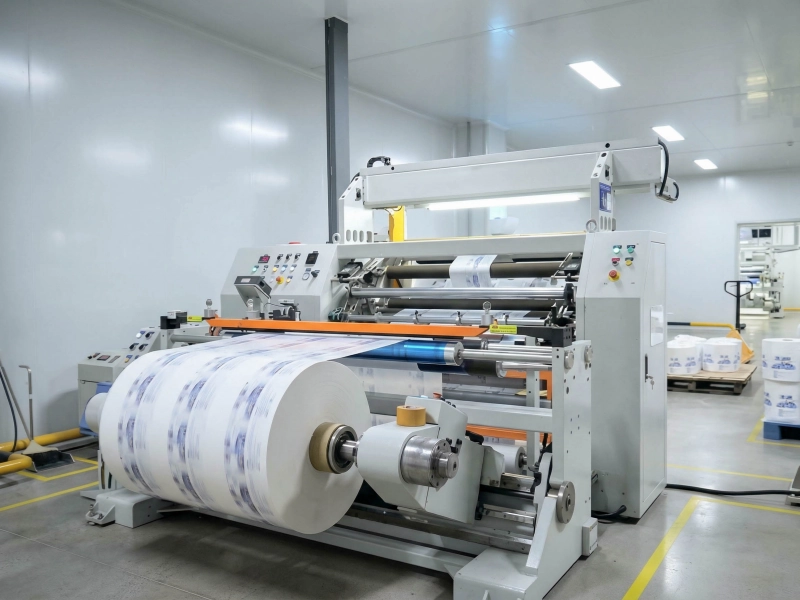
packaging film slitting and rewinding line

Dry Bands, Water Streaks, and Side-to-Side Imbalance

The dampening film usually moves through a range from too dry to stable to too wet. A press can have all three conditions across the same width at the same time. That is why a single water-setting number tells only part of the story.

A dry band is a narrow area carrying visibly less fountain solution than the surrounding film. If it remains in roughly the same lateral position as the film moves downstream, record that position. A fixed band is much more useful for tracing the source than a general impression that the unit is “running dry.”

A water streak appears as a narrow wetter or more reflective line. It may become stronger by the time it reaches the plate, but the earliest visible appearance is usually the useful one.

With side-to-side uneven dampening, the operator side, center, and drive side do not carry the same film. One side may still be short of water while the other is already wet enough. Increasing the whole water setting can improve one side and worsen the other.

Scumming on the drier area or stronger emulsification on the wetter area can help confirm what is happening. Keep them as supporting signs and continue tracing the water film.

Where Does the Water Film First Change?

Sheetfed, web, and packaging offset presses use different dampening layouts. Roller names and sequence may vary, so use the actual machine layout when it is available. What matters is the change in the film before and after each important contact point.

Posición Lo que ves What Deserves Attention
Fountain, tank, feed, or circulation The side-to-side difference is already present before normal metering begins. Supply flow, circulation, filtration, contamination, fountain solution condition, and temperature.
Metering roller The incoming film looks even, but becomes thinner, striped, or heavier on one side after metering. Metering surface condition, contamination, current setting, and contact at this position.
Transfer roller or intermediate roller A continuous film enters the contact, then a new dry line or wet streak appears. Local wetting, surface contamination, roller condition, and the contact around this position.
Dampening form roller The upstream film stays even, but a fixed band changes just before the plate. Surface condition, cover condition, diameter, finish, and existing contact records.
Plate No matching change can be found on the preceding rollers, but the plate still shows a local dry or wet area. Keep the plate and other press-side variables in the check.

For example, suppose a dry strip appears near the operator side. If the same strip is already visible immediately after the metering position, starting with the form roller wastes time. If the film stays even through metering and transfer, then breaks at that same position on the form roller, the evidence points much closer to that roller.

Photos can help when the problem comes and goes. Keep the viewing direction and lighting similar. A wet roller changes its reflection sharply with viewing angle, so inconsistent photos can make a normal film look uneven.

If the Film Is Already Uneven Upstream

When the difference appears before the suspected roller, look at the conditions feeding the dampening train. The most useful comparison is usually between the affected run and a period when the same press was running steadily.

Check whether the fountain solution temperature changed around startup or during a long production run. Compare any pH and conductivity records the plant already keeps. Also note recent solution replacement or top-up, filtration condition, circulation problems, and visible ink, paper debris, or other contamination in the system.

These readings work best as trends. Compare them with the machine manufacturer's requirements, the fountain solution supplier's working range, and the press's own stable history. Avoid turning one pH, conductivity, or temperature value into a universal target.

Record press speed and water setting as well. A weak lateral difference that becomes obvious at higher speed is useful evidence when you also know where in the dampening train it first appears.

Supply, fountain chemistry, plate condition, and general press settings remain press-side issues. They should stay with the press operator, equipment supplier, or relevant consumables specialist unless the evidence moves clearly toward a rubber-covered roller.

When the Pattern Points to a Dampening Roller

A roller becomes worth checking when the incoming film is stable and the same dry or wet band repeatedly appears after that roller. At this point, surface condition, recent roller work, and the relationship with the adjacent rollers become useful evidence.

For a broader view of rubber-covered positions used in printing equipment, Rodillos para la industria de la impresión covers the main roller applications around printing, transport, and printed-surface contact.

Match the Surface Change to the Same Band

The roller does not need to be cracked or badly damaged before its surface behavior changes. Compare the operator side, center, and drive side. Look for a band that is shinier, stained, sticky, visibly contaminated, or different in texture from the surrounding face.

A glazed area, ink residue, cleaner residue, paper-related contamination, or other deposit can change how that part of the cover accepts water. If the surface difference sits in the same lateral position as the dry band or water streak, the two observations become much more useful together.

Cleaning gives another practical comparison. If proper cleaning restores an even film and the same band returns after the press has run again, photograph the roller before and after cleaning and note roughly how long the improvement lasted.

The detailed causes of glazing belong to a separate deposit and roller-care problem. Here, the important part is simply whether the surface change and the water-film change line up.

Compare the Roller with the Last Stable Setup

If the problem began after replacement, grinding, or re-covering, compare the current roller directly with the previous stable condition. Start with diameter, known hardness, surface finish, and whether the working face looks uniform from end to end.

Diameter affects how the roller works against adjacent rollers. Surface finish affects how the cover accepts and carries the film. Two rollers can have the same nominal material and hardness yet behave differently after different grinding, finishing, curing, or compound choices.

If the old roller ran well for a long period, keep its measurements and photos. They provide a practical baseline for replacement and often narrow the roller specification faster than starting again from a generic material recommendation.

For selected ink- and liquid-contact positions, NBR / Nitrile Rubber Rollers can provide a general material reference. For a dampening position, the fountain solution, cleaning media, roller position, hardness, surface finish, and previous service condition still need to match the cover direction.

Use Contact Records as Confirmation

Once the same film change has been tied to one roller, existing nip stripe or contact records become useful. Compare the affected side with the center and the opposite side using the press manufacturer's setting procedure.

If an approved contact adjustment changes the same dry band or water streak, keep that result with the other evidence. Detailed nip-setting and mechanical adjustment should remain with the press procedure or a dedicated contact review.

For broader information on controlled roller contact and pressure distribution, see Rodillos de presión.

Keep a Simple Record Across the Press

Repeated dampening problems are easier to compare when the same positions are recorded each time. Use the operator side, center, and drive side consistently, and keep the same orientation in every photo.

Qué registrar Operator Side Center Drive Side
Water film Dry / stable / wet / streaked Dry / stable / wet / streaked Dry / stable / wet / streaked
First position where it changes Record the roller or contact point Record the roller or contact point Record the roller or contact point
Roller surface at that position Normal / glazed / contaminated / worn / visibly different Normal / glazed / contaminated / worn / visibly different Normal / glazed / contaminated / worn / visibly different
After one controlled change Better / same / worse Better / same / worse Better / same / worse

Add the press speed, water setting, fountain solution temperature, and any existing pH or conductivity records from the same run. If the metering roller or dampening form roller looks different across the width, take a full-face photo before cleaning and add close-ups of the affected area.

When production allows, change one condition at a time. If water setting, contact, cleaning, speed, and fountain solution condition all change together, even an improved print gives very little evidence about which change actually moved the water film.

Rodillos para la industria de la impresión — Rubber-covered roller applications used around printing, material transport, and printed-surface contact.

Transfer Rollers — Roller positions where controlled pickup, transfer, and release of liquids or other media matter.

Rodillos de caucho NBR/nitrilo — A material reference for selected ink, liquid, and industrial media-contact roller applications.

Rodillos de presión — Rubber-covered roller contact, pressure distribution, profile, and running accuracy.

If you already have drawings, dimensions, a sample, or a clear roller specification, send them directly to Wolorin for custom manufacturing, quotation, or production confirmation.

If details are incomplete, start with old roller photos, basic dimensions, roller position, contact medium, and the current roller-related problem.