
Common Paper Converting Problems
Paper converting problems usually show up first as small changes on the sheet: paper dust, dirty streaks, pressure lines, dents, coating marks, rewinding marks, or a paper web that slowly moves off track.
A useful check starts at the first visible position. Look at where the mark appears, which roller the sheet just passed, what was on the paper surface before contact, and whether the problem changes with pressure, humidity, speed, cleaning, or rewind diameter.
In many paper converting lines, the same few areas deserve attention: dust around cutting or slitting, pressure contact at nip points, coated paper surfaces, moisture change, rewind contact, and guiding or traction stability.
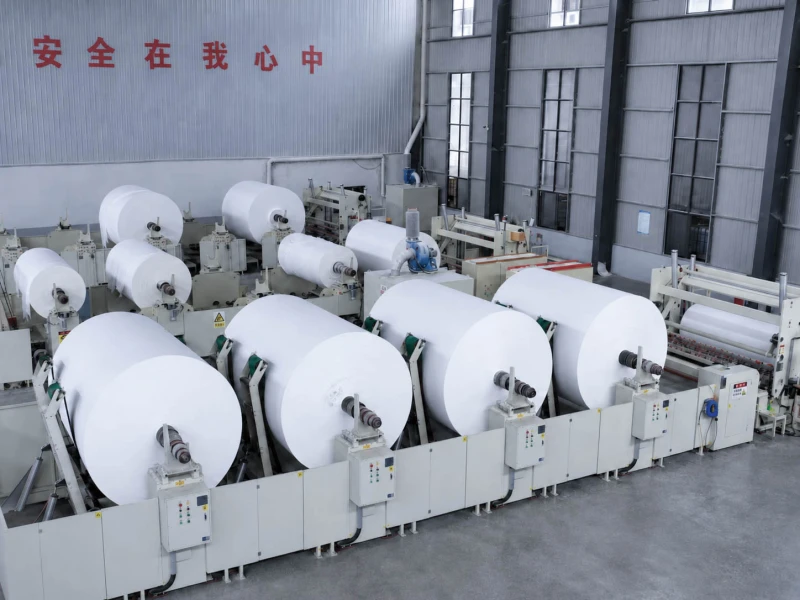
Find the First Contact Point That Changes the Paper
Paper reacts differently depending on basis weight, surface coating, moisture condition, dust level, and line speed. A roller setting that works well on one paper grade may start to leave marks after a paper change.
The fastest way to narrow the problem is to follow the sheet path and identify the first contact point where the surface changes.
| Lo que ves | Where to look first | Useful roller-side signal |
|---|---|---|
| Paper dust or dirty streaks | Feeding, cutting, slitting, transport contact | Dust collects on the same roller again after cleaning |
| Pressure line or dent | Nip, pressure roller, lay-on contact | Line changes after pressure adjustment |
| Coating mark | Coated side contact, glue area, transfer area | Mark begins after one roller position |
| Moisture-related surface change | Paper storage, humid area, wet cleaning area | Grip or marking changes during the run |
| Rewinding mark | Rewind entry, lay-on roller, roll build area | Mark changes with rewind diameter |
| Seguimiento de la inestabilidad | Guide, traction, edge-control area | Paper path shifts after one roller or speed change |
Paper Dust and Surface Contamination
Paper dust may come from the paper grade, cutting edge, slitting condition, coating layer, or sheet handling. Once dust reaches the roller surface, it changes the contact. The sheet may lose grip, pick up dirty streaks, or carry small particles into a pressure point.
A clean roller surface should return to a stable condition after wiping. If dust comes back quickly at the same position, check the roller cover more closely. A glazed, sticky, scratched, swollen, or unevenly contaminated surface can hold dust and transfer it back to the paper.
El polvo también se vuelve más problemático cuando se mezcla con tinta, pegamento, aceite o líquido de limpieza. En esas situaciones, la dirección del material del rodillo debe coincidir con el medio de contacto real. Para los rodillos de conversión de papel que también se encuentran con contaminación por aceite, tinta, pegamento o líquidos en general, Rodillos de caucho NBR / nitrilo can be one material direction to review.
Pressure Lines or Dents
Las líneas de presión y las hendiduras suelen aparecer alrededor de los puntos de contacto, los rodillos de presión, los rodillos de soporte o las zonas de contacto. La línea visible puede deberse a una alta presión de contacto, una presión desigual a lo ancho, polvo atrapado, puntos duros localizados, desgaste de los rodillos o un tipo de papel que se comprime fácilmente.
The timing matters. A line that appears after pressure adjustment usually points toward contact load. A line that appears after roller replacement or grinding often points toward surface finish, hardness, crown, runout, or installation. A line that becomes obvious after switching to lower basis weight paper may come from the paper becoming more sensitive to the same contact force.
For pressure positions, Rodillos de presión should be checked together with hardness, surface finish, crown, runout, bearing condition, and pressure balance. If the mark repeats at a fixed distance, measure the spacing and compare it with the roller circumference. That single check can quickly show whether one roller position deserves deeper review.
Coating Marks on Paper Surface
Coated paper, label stock, release paper, and printed paper are more sensitive to roller contact than plain paper. A fine coating mark may stay invisible at first, then become clear after pressure, dust pickup, dragging, or contact with a contaminated roller.
Look at the coated side under good light before and after each key roller. If the mark begins after one contact point, inspect that roller surface for dried coating residue, adhesive contamination, paper dust build-up, uneven grinding marks, local glazing, or a surface that has become too sharp for the coated side.
For coated paper, the roller does not always need stronger grip. It needs clean and stable contact. A surface that feels acceptable for general transport can still mark a coated sheet if pressure, roughness, hardness, and paper sensitivity are not matched. Paper grade, coating type, surface gloss, and required finish should be considered when reviewing Rodillos para conversión de papel.
Moisture-Related Surface Change
Moisture changes how paper runs through a converting line. The sheet may soften, curl, pick up more dust, or react more strongly to pressure. Operators may see unstable feeding, dull surface areas, pressure marks, tracking change, or inconsistent rewind quality.
Check the simple conditions first: paper storage, seasonal humidity, wet cleaning, drying condition, and whether the problem appears after a batch change or at a certain time of day. These details often explain why the same roller position suddenly becomes sensitive.
The roller surface still needs attention when it changes during the run. Swelling, softening, hardening, sticky feel, reduced grip, or heavier contamination under humid conditions can all disturb paper contact. For roller positions exposed to humid air, water contact, or moisture-sensitive running conditions, Rodillos de caucho EPDM may be a material direction to review. If ink, glue, oil, solvent, or coating liquid is also present, the full contact condition should guide the material direction.
Rewinding Marks
Rewinding marks should be checked with roll build, contact pressure, and repeat spacing together. A mark that becomes stronger as the roll diameter increases may relate to lay-on pressure, winding hardness, taper tension, or contact at the rewind entry. A mark that repeats from the beginning of the run often points toward a specific roller surface, local pressure point, runout, or contamination in the contact area.
The rewind section also receives problems from upstream. Paper dust, slight tracking movement, edge instability, or tension disturbance can enter the rewind and then become visible as marks on the roll.
In slitting, rewinding, and roll finishing areas, Rodillos para líneas de corte longitudinal y rebobinado should be reviewed around lay-on contact, surface finish, pressure direction, runout, and roll build behavior. Useful details include rewind diameter, paper basis weight in g/m² if available, contact pressure direction, and repeat mark spacing compared with roller circumference.
Tracking Instability
Paper tracking problems may appear as edge drift, skewed feeding, unstable entry into slitting, uneven roll edge, or telescoping after rewinding. The cause can come from web tension, edge quality, splice condition, paper moisture, roller alignment, guide setting, or traction difference.
A roller-side check becomes useful when the paper path changes after one position, after speed change, after cleaning, or after roller replacement. Look for uneven contamination, one-side wear, bearing play, poor parallelism, runout, or a roller surface that gives different grip across the width.
For path control and edge stability, Rodillos guía should be checked around alignment, surface condition, turning angle, and contact consistency. If the paper also slips, feeds unevenly, or loses speed synchronization, Rodillos de tracción should be reviewed for grip, pressure, surface finish, and contamination.
Roller Checks That Usually Give Useful Clues
In paper converting, the roller often shows clues before the full cause is clear. The surface can tell whether the contact has been clean, balanced, and stable.
Check these points on the roller side:
- dust build-up pattern across the width;
- glazed, polished, sticky, swollen, or hardened surface areas;
- local dents, scratches, high spots, or embedded particles;
- different wear on the drive side and operator side;
- runout and bearing play;
- crown or contact pressure balance;
- surface finish after grinding or re-covering;
- repeat mark spacing compared with roller circumference;
- changes after cleaning, pressure adjustment, speed change, or paper grade change.
For standard replacement, drawings, dimensions, hardness, roller position, and old roller photos may already be enough to start. For repeated marking, coated paper sensitivity, heavy dust build-up, or unstable rewinding, the review should include compound direction, bonding, surface finish, crown, runout, and the actual paper contact condition.
Páginas relacionadas
- Rodillos para conversión de papel — Paper converting roller positions, paper contact conditions, and common surface issues.
- Rodillos de presión — Pressure contact, dents, pressure lines, nip stability, and surface protection.
- Rodillos guía — Web path control, edge stability, and tracking-related roller positions.
- Rodillos de tracción — Grip, feeding stability, and speed synchronization in paper handling.
- Rodillos de caucho NBR / nitrilo — Roller positions involving ink, oil, glue, and general liquid contact.
- Rodillos de caucho EPDM — Moisture, humid air, water contact, and selected paper-related operating conditions.
Fabricación de rodillos a medida y control de calidad
Un rodillo de caucho fiable no solo depende de su tamaño. La dirección del compuesto, la estabilidad de la dureza, el grosor de la cubierta, el acabado superficial, la estructura del eje y la precisión de funcionamiento influyen en el rendimiento del rodillo en la línea de producción.
Wolorin ofrece servicios tanto para el reemplazo rutinario de rodillos como para proyectos personalizados más exigentes, con procesos de fabricación, inspección y controles de calidad documentados que se ajustan a los requisitos de cada proyecto. A continuación, puede consultar nuestro alcance de servicios, nuestro proceso de control de calidad y nuestra trayectoria empresarial.
Solicitar presupuesto
Si ya dispone de planos, medidas, muestras o especificaciones claras, puede enviárnoslos directamente. Wolorin puede proceder con la fabricación a medida, la cotización o la confirmación de producción en función de su documentación.
If the information is still limited, start with the roller position, paper type, visible defect, old roller photos, and the contact condition you are trying to improve.