Material
SBR / caucho estireno-butadieno
Los rodillos SBR se utilizan para contacto industrial seco y estándar cuando se necesita fricción ligera a media, amortiguación elástica y comportamiento general de recubrimiento.
SBR, caucho estireno-butadieno, suele considerarse para posiciones interiores sin aceite y con condiciones claras. Puede utilizarse en transporte, apoyo, presión ligera, nip, apriete, guía, accionamiento, tracción y contacto básico.
Cuando se necesita mayor vida frente al desgaste, agarre más fuerte, resistencia al aceite o intemperie, mayor temperatura o estabilidad prolongada, PU, NBR, EPDM, silicona, FKM u otro compuesto puede ser mejor.
Puede empezar con planos, dimensiones del rodillo antiguo, fotos o simplemente posición y problema actual.
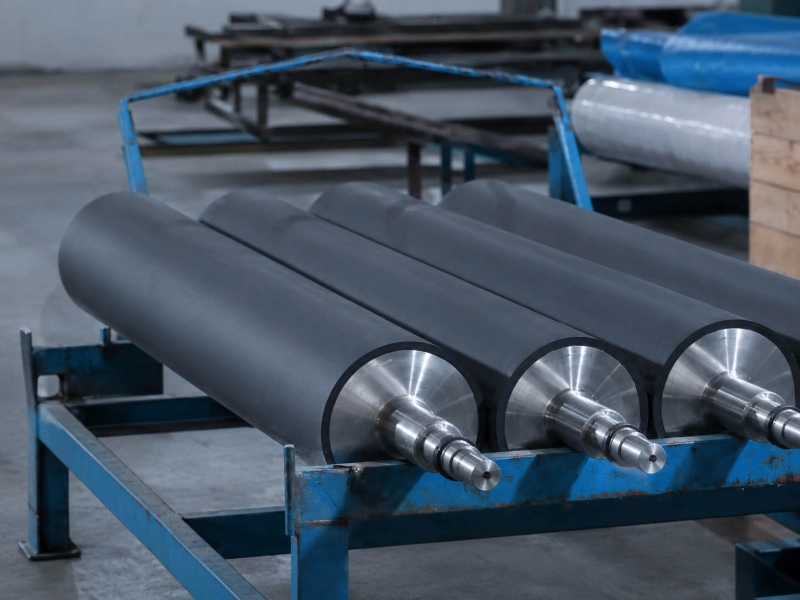
SBR se emplea principalmente cuando el contacto es sencillo, el entorno es seco y aceite, alta temperatura, disolventes fuertes o envejecimiento exterior no son la preocupación principal.
Los puestos más comunes incluyen:
SBR is a practical option when the roller mainly needs stable contact, moderate wear resistance, and elastic cushioning in a straightforward industrial position.
The following information can be used as an initial reference. Final specifications should be confirmed according to roller size, covering thickness, hardness, pressure, and application position.
| Artículo | Dirección típica |
|---|---|
| Material | SBR / caucho estireno-butadieno |
| Dureza común | Aproximadamente 40–90 Shore A |
| Temperatura | Aproximadamente -25°C a +100°C |
| Características | Contacto estándar, desgaste moderado, amortiguación elástica, coste razonable |
| Entorno | Seco, sin aceite, interior industrial |
| Superficies | Lisas, rectificadas, mate, ligeramente texturizadas |
| Base de personalización | Plano, muestra, rodillo existente o condiciones de trabajo |
SBR / caucho estireno-butadieno
Aproximadamente 40–90 Shore A
Aproximadamente -25°C a +100°C
Contacto estándar, desgaste moderado, amortiguación elástica, coste razonable
Seco, sin aceite, interior industrial
Lisas, rectificadas, mate, ligeramente texturizadas
Plano, muestra, rodillo existente o condiciones de trabajo
SBR is suitable for light to medium friction contact.
Para desgaste intenso, mayor presión, más agarre o vida útil más larga, PU u otro compuesto resistente al desgaste puede ser mejor.
SBR is not the best choice for every roller position. Another compound should be reviewed when the roller needs:
If the same roller problem repeats after replacement, the issue may not be hardness alone. The material, surface finish, cover thickness, and working condition should be checked together.
SBR is mainly connected with basic contact, light to medium friction, and general rubber covering positions.
Related pages worth reviewing:
for basic surface drive and power transfer
Rodillos de tracciónfor material movement and friction contact
Rodillos de aprietefor feeding, gripping, and paired roller contact
Rodillos de presiónfor simple pressure contact and cushioning
Rodillos de caucho naturalfor higher elasticity and rebound needs
Rodillos de caucho de poliuretanofor stronger wear resistance, grip, and load-bearing needs
Browse more categories:
Para contacto industrial estándar, transporte general, presión ligera, apoyo, nip, guía y posiciones secas.
SBR provides moderate wear resistance for light to medium contact.
For heavy wear, higher pressure, stronger grip, or longer service-life requirements, PU is usually a better direction to review.
SBR is not usually selected as an oil-resistant roller material.
For oil, ink, lubricant, or industrial media contact, NBR or another media-resistant compound is usually more suitable.
SBR is suitable for standard contact and moderate wear.
PU is better for higher wear resistance, grip, load-bearing, and longer service life.
SBR is suitable for dry indoor contact.
EPDM is usually better for ozone, moisture, weathering, outdoor exposure, or open-environment applications.
Los rodillos de caucho SBR son adecuados para aplicaciones industriales estándar de contacto, desgaste moderado y amortiguación elástica.
Send us your drawings, dimensions, roller position, or current issue.
We will help confirm whether SBR or another rubber material is more suitable for your application.