คู่มือการเปลี่ยนฝาครอบลูกกลิ้งแรงดันของเครื่องกรองสายพาน
Replacing a worn belt filter press pressure roll starts with finding the correct part. The machine typically has a gravity drainage section, a wedge zone where two filter belts come together, and a high-pressure section where successive rolls squeeze the sludge held between the belts.
For belt filter press rubber covered rollers, identify the exact high-pressure roll and check its original covering. Some machines use rubber, while others have Rilsan or other non-rubber coatings. Roll dimensions and loads can also vary within the same press.
If the existing rubber-covered roll has worked well and operating conditions remain unchanged, its original drawing and specifications provide a practical basis for replacement. Check any visible damage and confirm the mounting details before ordering.
Find the Correct Rubber-Covered Roll
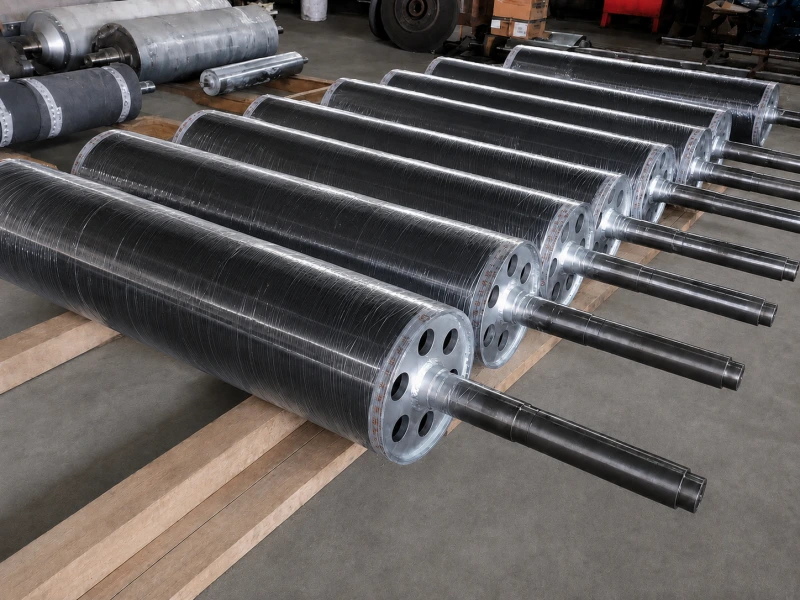
Start with the roll number on the machine drawing or parts list. Match it to the installed position. If the documentation is incomplete, a photo showing the roll and the belt path can help identify the correct part.
High-pressure rolls may look similar but have different diameters, loads, and shaft arrangements. Using the dimensions of a nearby roll can result in the wrong replacement.
The covering also needs to be identified. Rubber and Rilsan are different covering systems. If the original roll is specified with Rilsan, changing it to rubber requires confirmation against the machine’s design.
A perforated drum elsewhere in the press is another distinct component. Its construction should not be confused with that of a rubber-covered pressure roll.
The original drawing or covering specification is the preferred reference. Photos of the removed roll can establish the covering area and show visible damage, although the material itself may still need confirmation from the original records.
Read the Wear Pattern Before Changing the Cover
In the high-pressure section, the rubber surface contacts the outside of the filter belt. The sludge stays between the two belts as they wrap around successive pressure rolls.
When a cover wears unusually quickly, the location of the damage is worth examining before selecting a different rubber compound.
A narrow worn band near one end may line up with the belt edge. Compare the mark with the belt’s actual running position. If the edge repeatedly rubs the same area, the new cover may develop similar damage.
Wear across the working face suggests a different check. Abrasive deposits trapped between the belt and rubber can scratch the surface. A damaged belt or changed operating load may also contribute.
Cover separation needs closer attention to the old construction. If rubber is lifting away from the core, examine the failure area and original bonding arrangement. Simply copying the old cover may leave the cause of the failure unresolved.
The old roller’s service history matters here. A cover that has worked satisfactorily under the same belt contact and load provides a useful material and surface reference. Repeated early failures call for a closer look at the contact and covering construction.
A change in sludge cake dryness, without corresponding evidence of roller damage or abnormal contact, requires a separate process check. Changing the rubber specification alone cannot be expected to correct it.
Check the Rubber Surface and Shaft Ends for Water Damage
A belt press operates in a wet environment, with filter belts washed regularly. Water, sludge residue, and cleaning chemicals can affect the rubber face and exposed metal areas differently.
Cuts, grooves, and abrasion on the working face suggest mechanical damage. Swelling, softening, or cracking after washing raises questions about the liquid reaching the rubber.
If cleaning chemicals are used, the chemical type, concentration, and temperature can affect the choice of compound. These details become especially useful when the old cover has deteriorated unusually quickly.
The roller ends have a separate concern: corrosion.
Wash water can reach the cover edges, shoulders, and exposed shaft areas. If rust appears around the end of the covering, look at where the original protection stops and whether the surrounding metal has been affected.
Consider a roller whose working face is still sound but whose cover edge has split, leaving the metal underneath exposed to water. Replacing the face rubber alone would leave the damaged end protection unresolved.
Some original rollers have protective covering extending onto selected end or shaft areas. The replacement should follow the original protection arrangement while preserving the required bearing fits and mounting surfaces.
Corrosion that has reached the core or journals also changes the replacement decision. Their condition must be established before the old assembly can be considered for reuse.
Match the Finished Diameter, Core, and Shaft Dimensions
A complete original drawing is usually enough to start a straightforward replacement quotation.
The finished outside diameter, working face length, and rubber thickness establish the main covering dimensions. The core and shaft drawings establish the construction needed to fit the machine.
One detail deserves care: the drawing must distinguish the bare core diameter from the finished diameter after rubber covering. Confusing the two can result in a roller that cannot be installed as specified.
The shaft arrangement is equally important. Journal diameters, shoulders, bearing fits, and mounting details must follow the original drawing.
For a complete new roller, available load and roller weight information can also help confirm the construction. Where the original machine has undergone modifications, use the current installation requirements rather than relying on an outdated drawing.
Three Details to Confirm Before Ordering
| Original machine detail | การดูด | ทำไมเรื่องนี้ถึงสำคัญ |
|---|---|---|
| Roll number | Match the number to the exact high-pressure position. | Similar-looking rolls may have different dimensions, loads, and shaft arrangements. |
| Rubber covering | Confirm the working face, finished diameter, cover thickness, and cover termination. | Establishes the required covering area and finished size. |
| Shaft-end protection | Check protected areas, journal dimensions, and bearing fits. | Retains the required corrosion protection and mounting compatibility. |
For a confirmed rubber-covered pressure roll, Wolorin’s ลูกกลิ้งบีบและรีดน้ำ offering provides the relevant manufacturing route.
An unchanged, satisfactory design can proceed from the verified specification. When the core is damaged, the load has increased, or the cover repeatedly separates, the affected roller construction needs further review before production.
หน้าที่เกี่ยวข้อง
ลูกกลิ้งบีบและรีดน้ำ — Rubber-covered rollers for wet-contact and liquid-removal applications.
ลูกกลิ้งกด — Rubber covering and construction considerations for pressure-contact applications.
Have drawings, dimensions, or an existing specification? Send them to Wolorin for custom manufacturing and quotation. If details are missing, start with the roll number, old roller photos, contact liquids, and the current cover or shaft-end problem.