
ฝาครอบลูกกลิ้งสำหรับเครื่องอัดฟิล์ม: สิ่งที่ต้องระบุ
Before ordering a film size press rubber roll cover, confirm the press type and the roller being replaced.
In a metered film size press, a metering rod controls the starch film on a soft-covered applicator roll. The roll then carries the film into the paper nip. Pond size presses and hard-nip sizers use different arrangements, so their cover specifications cannot be copied directly.
Check the machine drawing or old-roll position to identify the applicator roll. If it has performed well under unchanged conditions, the original drawing and cover specification provide a practical starting point for replacement. Changes in paper grade, rod contact, or operating temperature may call for a closer look.
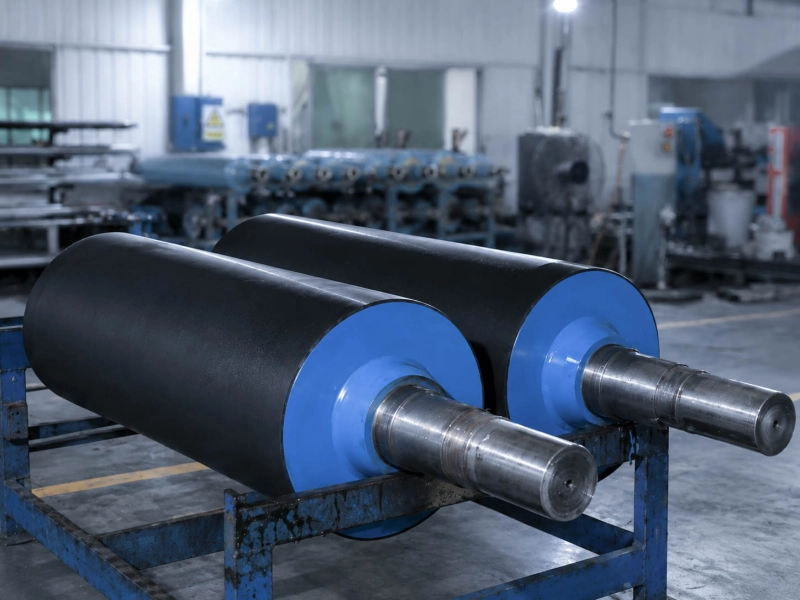
How the Metering Rod and Paper Nip Affect the Cover
The applicator roll works against two different surfaces during every rotation.
At the metering rod, the rubber surface supports a controlled starch film while enduring continuous contact. Rod condition, surface wear, and the original cover finish matter here.
At the paper nip, the cover compresses under load and transfers the starch film to the sheet. Hardness and cover construction influence this contact and the way starch enters the paper.
A replacement must preserve suitable performance at both positions. The original roll and its operating records help establish what has already worked.
What to Check Before Choosing the Cover
| Contact or record | บอกอะไร |
|---|---|
| Metering rod side | Wear tracks or scratches near the rod contact can point to a local contact issue. Compare the rod and cover surfaces before selecting a replacement. |
| Paper nip side | Original hardness and cover construction provide a reference for paper contact. Check whether the paper grade or required starch transfer has changed. |
| Original roll records | The original P&J value, cover specification, and service history help determine whether the established cover can be reproduced. |
The metering rod is a separate mechanical component. The rubber-covered applicator roll carries the metered starch film to the paper.
Does a New Paper Grade Need a Different Cover?
Paper grade affects how starch is distributed after it reaches the sheet.
More porous, absorbent base paper generally allows starch to penetrate further into the sheet. Denser paper tends to retain more starch near the surface.
ผลลัพธ์ที่ต้องการจะแตกต่างกันไปตามการใช้งาน กระดาษแข็งสำหรับทำแผ่นรองและกระดาษลูกฟูกอาจได้รับประโยชน์จากการแทรกซึมของแป้งที่ลึกกว่าเพื่อเพิ่มความแข็งแรง ในขณะที่กระดาษสำหรับงานพิมพ์บางชนิดต้องการการกักเก็บแป้งไว้ใกล้พื้นผิวมากกว่า.
Cover hardness can influence this balance through nip contact. In comparable film-sizing conditions, harder covers can promote deeper penetration, while softer covers can favor greater surface retention. Paper absorbency, starch properties, and nip conditions also affect the result.
Consider a mill switching from a linerboard grade to an uncoated printing grade.
The original applicator cover may still be in good condition, but the new paper has a different sizing requirement. Before changing the cover, establish whether the mill needs deeper penetration or more starch near the surface.
If the sizing result changes while the cover remains in good condition, check the paper and starch conditions first. A different rubber specification becomes relevant when the new grade requires a different nip-contact response.
What the Old Cover’s Wear Can Tell You
The location of wear is often more useful than a general description such as “the rubber wore out too quickly.”
A narrow wear band along the metering rod contact should be compared with the rod’s position and surface condition. If the damage appeared after a rod replacement, record that change before ordering another cover.
Rod condition can affect both film metering and cover wear. If the rod-side contact has changed, repeating the original rubber specification alone may leave the wear problem unresolved.
Heat and wet contact require a different review.
A film size press cover works with warm starch and continuous nip loading. Long-term exposure to heat, moisture, and cleaning chemicals can affect rubber properties.
The old cover may show several different forms of damage.
Hardening or cracking calls for a comparison with operating temperature and service history.
Softening or swelling makes the starch medium and cleaning chemicals worth checking.
Separation between the rubber and core brings the bonding condition and core suitability into the replacement decision.
These observations help narrow the roller-related checks. They cannot establish a failure cause without the operating history.
When the same damage returns after replacement, compare the old and new service conditions before choosing the next compound or cover construction.
Why the Original P&J Hardness Matters
Film size press applicator covers are often specified using P&J hardness.
P&J measures the depth of indentation under a specified force. A lower P&J value indicates harder rubber. Shore A uses a different measurement method, so the original P&J value should be retained without an unverified conversion.
For replacement manufacturing, use the hardness specified on the original drawing or manufacturing record.
A reading taken from a worn roller describes its current condition. Years of operation, surface wear, and temperature exposure may have changed the rubber since it was manufactured.
If the original record is missing, use the known cover construction, machine information, and old-roll details to establish the replacement direction. The hardness must then be confirmed for the actual applicator position.
An assumed industry-average value is too uncertain to use as the original specification.
What to Confirm Before Ordering the Replacement
An established applicator roll with a satisfactory service history can usually be replaced using its original drawing and confirmed cover specification.
The drawing should identify the finished outside diameter, rubber face length, cover thickness, shaft-end dimensions, and required surface finish.
Pay particular attention to the shaft ends. A roll with the correct rubber diameter and face length can still fail to fit if its journals, shoulders, or bearing seats differ from the original design.
For a heavily worn cover, use the original finished dimensions rather than relying on its current outside diameter.
If the order involves re-covering an existing roller, confirm that the core is suitable for reuse.
Where service conditions have changed or premature wear keeps returning, the affected parts of the specification deserve further attention. Depending on the evidence, this may involve compound direction, bonding, cover thickness, or grinding and surface finish.
ส่งแบบหรือรายละเอียดลูกกลิ้ง ลูกกลิ้งถ่ายโอน page covers the broader manufacturing requirements for rubber-covered liquid-transfer positions. A film size press replacement should still be manufactured against the actual applicator drawing and agreed specifications.
หน้าที่เกี่ยวข้อง
ลูกกลิ้งกด — Further information on rubber-covered rollers used for controlled nip contact and pressure distribution.
Send Wolorin the applicator drawing or confirmed dimensions for quotation and manufacturing. If records are incomplete, old-roll photos, roller position, paper grade, starch medium, and current cover damage can start the discussion; include P&J or rod-wear records if available.