
Custom Laminating Rollers
Custom laminating rollers for bonding, pressure transfer, and stable web handling in industrial laminating lines.
A laminating roller does more than apply pressure. In actual production, it affects bond consistency, air release, surface protection, web stability, and the final appearance of laminated materials. That is why laminating roller design usually depends on the substrate structure, adhesive system, line speed, temperature exposure, pressure condition, and the sensitivity of the web surface.
Wolorin supplies custom laminating rollers for film, foil, paper, fabric, nonwoven, tape, label, and other roll-to-roll laminating applications. Projects can be reviewed based on drawings, existing rollers, samples, or actual operating conditions.
Typical project directions may include:
- Rubber-covered or polyurethane-covered laminating rollers
- Smooth, matte, grooved, crowned, or position-specific surface finishes
- Cover hardness typically from 20–95 Shore A, depending on pressure duty and substrate sensitivity
- Diameter, face length, shaft structure, and journal details based on project requirements
- Material directions such as silicone, polyurethane, EPDM, NBR, or FKM, depending on line conditions
Need custom laminating rollers for your line? Send us your dimensions, drawing, sample, or application details for quotation.
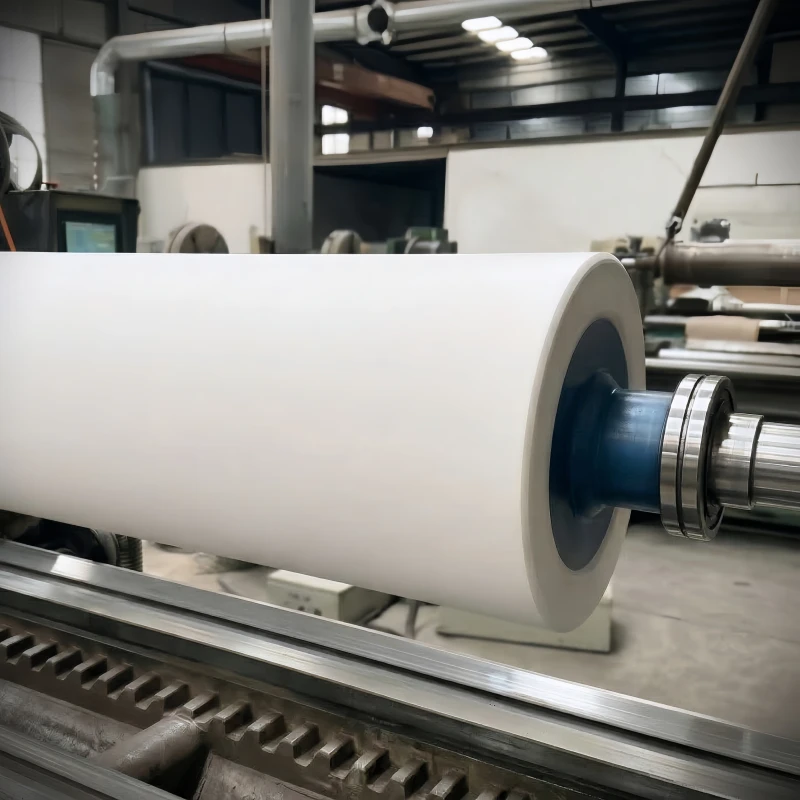
How Laminating Rollers Work in Production Lines
In a laminating line, the roller is usually part of a controlled pressure zone where two or more layers are joined together under defined contact conditions. Depending on the process, the laminating roller may work with adhesives, thermal bonding, protective films, functional coatings, or surface-sensitive substrates.
What makes laminating rollers different from general support or pull rollers is that they influence both pressure transfer and material quality at the same time. The roller does not only help move the web. It also affects whether the laminated structure bonds evenly, whether air is trapped in the nip area, whether the surface is marked, and whether the finished roll remains stable downstream.
Typical laminating roller duties may include:
Applying stable and uniform pressure across the working width
Supporting bond consistency between multiple layers
Reducing bubble risk and uneven contact at the nip
Protecting sensitive film, foil, or coated surfaces from damage
Maintaining controlled running behavior under heat, tension, and continuous production load
Because different laminating lines use different substrates and bonding methods, not all laminating rollers should be designed the same way. Some positions need stronger pressure stability. Some need better release behavior. Some need a softer contact response to reduce marking risk. In practice, the correct roller design starts from the actual laminating duty rather than from a generic roller label.
Operating Conditions for Laminating Rollers
Even when different applications use the same product term, their actual laminating conditions can vary significantly. Roller selection should therefore start from the real operating environment rather than from a standard product description alone.
Key operating inputs commonly include:
Substrate type, such as film, foil, paper, coated web, or composite material
Bonding method, including adhesive, solventless, thermal, or hot-melt laminating
Line speed and web width
Operating temperature and heat exposure duration
Counterpart roller type, such as steel, heated, chill, or covered roller
Contact with adhesive, solvent, coating residue, oil, or cleaning chemicals
Surface sensitivity, including marking, sticking, scratching, or slip risk
Nip load, web tension, and pressure consistency requirements
These conditions are often the main factors that determine whether a laminating roller will perform well in the actual station.
Design Considerations for Laminating Rollers
Once the operating conditions are clear, the roller structure should match the actual process. In laminating applications, performance usually depends on the right combination of hardness, profile, dimensional control, surface finish, and shaft structure.
Hardness: matched to pressure level, substrate sensitivity, and counterpart roller condition
Profile: straight or crowned depending on pressure distribution and working width
Dimensional control: important for stable running, especially at higher speeds
Cover build and finish: selected for pressure response, release, traction, and substrate protection
Core and shaft structure: configured for alignment, stability, and long-term operation
In many laminating applications, structure matching matters as much as material selection.
Common Problems in Laminating Applications
Many laminating defects that appear to be caused by adhesive or tension issues are also related to roller mismatch, surface condition, or dimensional instability.
Uneven bonding across the width: This is often linked to poor pressure distribution, profile mismatch, or insufficient shaft stiffness.
Wrinkles or trapped air: These issues may result from unstable nip formation, poor contact consistency, or web handling instability.
Surface marking or impression: A hard, damaged, contaminated, or poorly finished roller cover can leave marks on sensitive substrates.
Slip or unstable traction: Surface condition, finish, and hardness all affect web grip during laminating.
Premature cover wear: Fast wear may indicate heat, chemical exposure, contamination, or a compound not suited to the application.
Custom Laminating Roller Manufacturing
We manufacture custom laminating rollers for a wide range of industrial laminating applications. Production can be arranged according to confirmed specifications, customer drawings, existing roller dimensions, samples, or actual application requirements.
Typical custom manufacturing capability can include roller diameters up to 1,500 mm, face lengths up to 12,000 mm, cover hardness typically from 20 to 95 Shore A depending on compound and application, and cover thickness commonly from 3 to 30 mm, with thicker custom builds available for specific project requirements.
Whether the project is for a new line, a replacement roller, or an existing application upgrade, the roller structure should match the real function of the station and the actual line conditions.
How to Select the Right Laminating Roller
Selecting a laminating roller usually starts from the actual contact duty in the line rather than from the old roller name alone.
Common review points include:
What materials are being laminated
Whether the process uses adhesive, thermal bonding, or protective film contact
Whether the substrate surface is soft, glossy, coated, or easy to mark
Required pressure level and contact stability
Line speed, temperature exposure, and web tension
Whether release behavior, traction balance, or surface protection is more critical
Existing roller dimensions, shaft details, and current service problems
A practical selection process should help match pressure behavior, surface condition, and running stability to the actual laminating position.
Common Material Directions for Laminating Rollers
Material choice for laminating rollers depends on temperature, media exposure, wear demand, and the required surface behavior.
Silicone rubber for higher temperature resistance and cleaner release behavior
Polyurethane for wear resistance and stronger load-bearing performance
EPDM for certain chemical or general industrial environments
NBR for suitable oil-related or media-contact conditions
FKM for more demanding heat and chemical exposure conditions
The final material should always be matched to the actual laminating station rather than selected from a general material list alone.
Why Pressure Uniformity Matters in Laminating
In laminating applications, pressure is not only a mechanical requirement. It is directly linked to product quality.
If pressure across the roller face is uneven, the line may show visible differences in bonding strength, trapped air, local wrinkles, edge defects, or inconsistent surface appearance. These problems are often more obvious on wider webs, thinner films, glossy surfaces, coated materials, and multilayer structures that are less tolerant of local pressure variation.
That is why laminating roller review usually pays close attention to more than basic diameter and length. In many projects, the more relevant factors are:
Cover hardness and compression response
Surface finish and contact behavior
Crown or profile direction where needed
Shaft support and overall running stability
Line temperature, adhesive condition, and web tension
Surface sensitivity of the substrate being laminated
A laminating roller that is too hard may increase marking risk or reduce contact forgiveness. A roller that is too soft may create pressure instability under load. A surface that is correct for one laminating structure may not be suitable for another. For that reason, laminating projects are usually better reviewed by actual pressure duty and substrate behavior rather than by old roller material alone.
Surface, Profile, and Shaft Configuration Options
In laminating applications, roller performance depends on more than cover material alone. Surface behavior, roller profile, shaft structure, and cover build should all match the actual station.
Surface finish options for release, traction, or substrate protection
Straight or crowned profiles depending on pressure distribution and web width
Shaft and journal configurations based on installation and support method
Cover thickness selected according to pressure response and durability requirements
Core structure adjusted for stiffness, alignment, and running stability
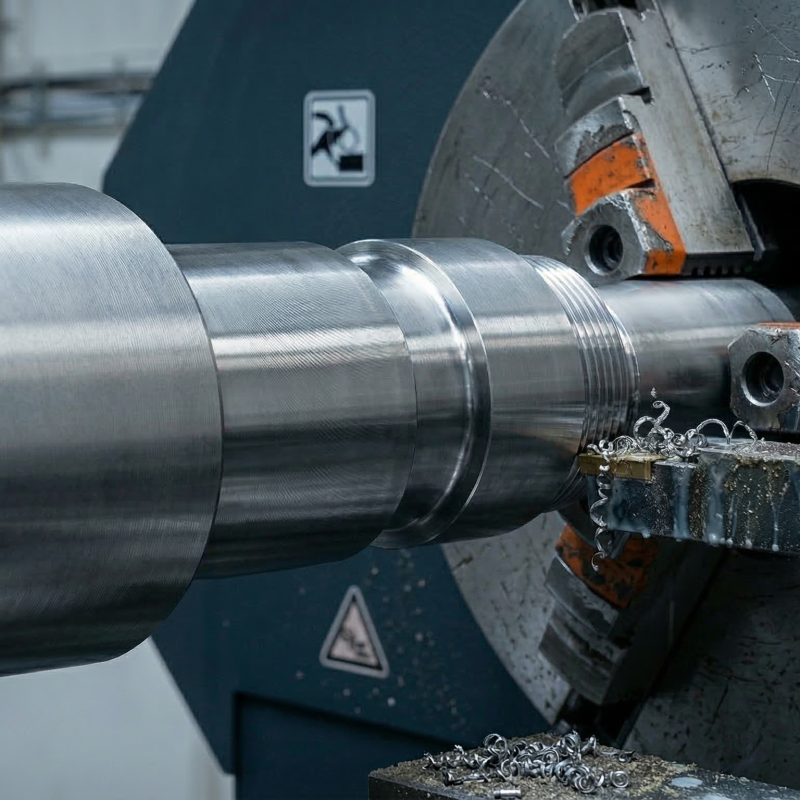
Production Check and Delivery Review
Before shipment, laminating rollers can be checked according to order requirements for key dimensions, shaft details, cover hardness, and surface condition.
For projects with higher requirements on bonding consistency, surface quality, or running stability, the relevant production and finishing details can also be reviewed before delivery.
This helps reduce mismatch during installation and supports more stable use on the production line.
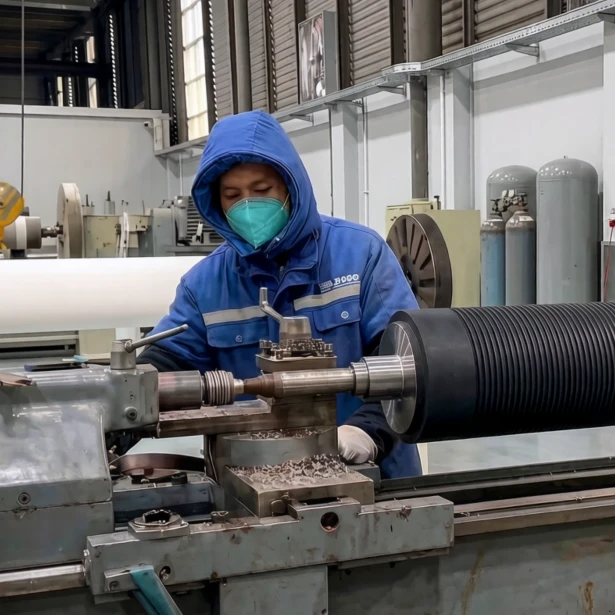
Why Choose Wolorin for Custom Laminating Rollers
Wolorin focuses on custom rubber roller manufacturing for industrial applications. For laminating roller projects, we provide practical manufacturing solutions based on actual application needs, confirmed dimensions, replacement requirements, and different line conditions.
This page is intended to be useful for buyers with confirmed specifications, replacement projects, or applications that still need a suitable material or structural direction.
The goal is to provide a laminating roller solution that is clear, workable, and suitable for real industrial use.
Frequently Asked Questions About Laminating Rollers
What is the difference between a laminating roller and a pressure roller?
A pressure roller is a broader functional term. A laminating roller is a more specific type used in bonding or combining stations. In many applications, a laminating roller is also a type of pressure roller.
What hardness is suitable for laminating rollers?
There is no single hardness for all applications. The correct range depends on substrate type, pressure level, counterpart roller, and surface sensitivity.
Why do laminating rollers leave marks on film or foil?
Marking may be caused by excessive hardness, poor surface finish, contamination, damage on the cover, or unstable pressure conditions.
What information is needed for quotation?
Useful information includes roller size, shaft dimensions, substrate type, line speed, operating temperature, contact media, and any current problems such as uneven bonding or wear.
Explore Related Pages
By Function
Explore related function pages such as Pressure Rollers, Guide Rollers, Coating Rollers, and Nip Rollers.
By Applications
Explore roller solutions for coating and laminating lines, film converting, flexible packaging, and related web processing industries.
By Material
Compare material directions such as Silicone, Polyurethane, EPDM, NBR, and FKM for different laminating conditions.
Request a Quote for Laminating Rollers
Need custom laminating rollers for your production line?
We can manufacture according to confirmed specifications, drawings, existing roller dimensions, samples, or actual application requirements. If you already have complete technical details, quotation can be arranged directly. If some parameters are still not fully clear, the main production details can also be confirmed based on the application.
To help us quote more efficiently, you can send roller dimensions, shaft details, substrate information, line speed, operating temperature, contact media, drawings, or product photos.